


What Is A Servo Motor Bracket? What Is It Used For?
Leave a message
Servo Motor Bracket
A servo motor bracket is a mechanical structural component used to secure and support a servo motor. It is typically made of metal (such as aluminum alloy or steel) or high-strength engineering plastic. The design of the bracket must precisely match the installation dimensions of the servo motor (e.g., flange size, installation hole positions) to ensure the motor remains stable during operation and accurately transmits its power output.
Main Uses
Mechanical Fixing and Positioning
The bracket firmly installs the servo motor in the specified position of mechanical equipment (e.g., machine tools, robots, automated production lines, 3D printers). It ensures the motor's axis aligns with the axis of transmission components (e.g., gears, couplings, screws), preventing transmission errors or mechanical wear caused by installation deviations.
Application Scenarios: Spindle drives of CNC machine tools, motor installations in industrial robot joints, and motor fixings in automated conveyor lines.
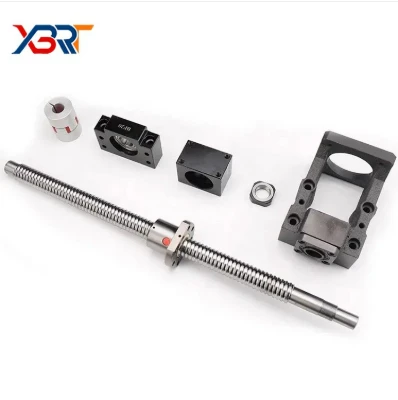
Transmitting Power and Load
As a connecting bridge between the motor and the mechanical system, the bracket transmits the rotational or linear motion of the motor to the actuator (e.g., conveyor belts, tools, robotic arms) while bearing the torque, thrust, or tension during movement.
Example: In a woodworking engraving machine, after the servo motor is fixed by the bracket, it drives the lead screw via a coupling to achieve precise movement of the workbench.
Shock Absorption and Stable Operation
Some brackets incorporate shock-absorbing structures (e.g., rubber cushions, elastic supports) to reduce motor vibration transmitted to the mechanical equipment, thereby decreasing noise and improving movement smoothness.
Applicable Scenarios: Equipment with high precision and stability requirements, such as semiconductor packaging equipment and precision testing instruments.
Protecting the Motor and Simplifying Maintenance
The bracket provides physical protection to prevent the motor from direct contact with dust, oil, or external collisions.
The standardized design of the bracket facilitates motor disassembly and maintenance. For instance, when the motor needs replacement, it can be quickly removed by loosening the bracket's fixing bolts, enhancing maintenance efficiency.

Adapting to Complex Installation Environments
According to equipment requirements, the bracket can be designed into various shapes (e.g., L-type, U-type, flange-type) or with adjustment mechanisms (e.g., angle adjustment, position fine-tuning) to meet installation requirements in confined spaces or at special angles.
Example: In collaborative robots, compact brackets enable integrated installation of motors and robot arm joints, saving space and optimizing the mechanical structure.
Key Features
High-Precision Processing: The mounting hole positions, flatness, and other dimensions of the bracket must strictly match those of the motor and equipment to ensure installation accuracy.
Strength and Rigidity: The bracket must withstand the dynamic load during motor operation to avoid deformation affecting transmission accuracy.
Modular Design: Some brackets support quick replacement or integration with other transmission components (e.g., reducers, sensors) to enhance system flexibility.
Servo motor brackets are indispensable basic components in automation equipment, and their performance directly impacts the motion accuracy, stability, and service life of the equipment.


