


What Is the Difference Between Oval Flange and Round Flange Linear Bearings?
Leave a message
When selecting linear moving components for industrial equipment, many buyers compare Oval Flange Linear Bearings with round flange linear bearings to determine which design is more appropriate for their application. Although both types of design are designed to support smooth linear motion, they differ in structure, installation methods, spatial requirements and application suitability.
Understanding the difference between these two bearing types will help improve equipment stability, installation efficiency and overall performance of the equipment.
What is an Oval Flange Linear Bearing?
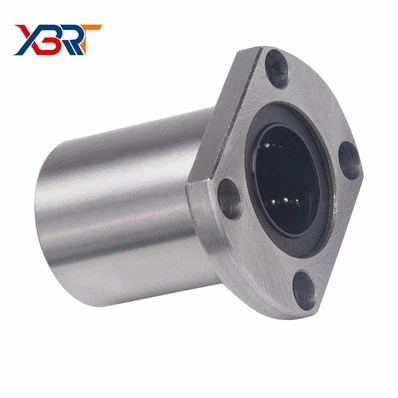
An Oval Flange Linear Bearing is characterized by an elongated flange shape with mounting holes on both sides of the bearing housing. This design allows bearings to be mounted securely on machinery surfaces while maintaining a compact mounting structure.
Oval flange bearings are commonly used in the following situations:
Limited Installation space.
Need for compact machine design
Stable mounting is important
Lightweight structures are preferred.
The oval flange design provides good positioning stability while reducing overall installation occupancy.
What is a Round Flange Linear Bearing?
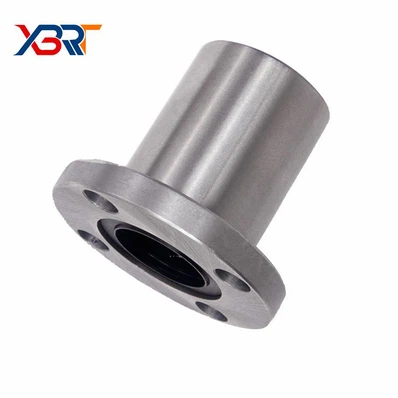
A round flange linear bearing adopts a circular flange structure with mounting holes distributed on the flange surface. This type is widely used in machinery that requires balanced installation support and even load distribution.
The bearings commonly used in circular flange bearings are:
Heavy equipment
High-load applications
Machinery requiring symmetrical mounting
Installation of larger systems
The circular flange structure helps provide stable support from multiple mounting directions.
Difference in Flange Shape

The most obvious difference is the design of the flange design itself.
- Oval Flange Design
- Elongated flange shape
- Two mounting holes
- Compact structure
- narrow installation width;
- Circular flange shape
- Multiple mounting holes
Greater areas of support
Symmetrical structure
The flange shape directly affects installation mode and the flexibility of the machine layout.
Installation Differences
Installation requirements are another important difference between the two bearing types.
An Oval Flange Linear Bearing are usually easier to install in compact equipment because of its narrower flange design, which requires less mounting space. It is suitable for applications where machine layouts are compact or where components must be positioned close together.
Round flange bearings generally require more mounting space, but can provide stronger support for larger machinery and higher load conditions.
Load Capacity Comparison
Load distribution varies according to the flange structure.
Round flange linear bearings usually provide:
Better load balancing
Higher installation stability
Improved support for heavier loads
Oval flange bearings are commonly used for:
Medium load applications
Compact automation systems
Lightweight machinery
The correct choice depends on actual operating conditions and equipment requirements.
Differences in application
These two bearing types are widely used in industrial automation and linear motion systems, but their applications may be slightly different.
Oval Flange Linear Bearings are commonly used in:
Automation equipment
Packaging machinery
Printing press
Compact linear systems
Round Flange Linear Bearings are commonly used in:
- CNC machinery
- Heavy industry equipment
- Large-scale automation systems
- High-load mechanical structures
Choosing the correct bearing type depends on the size of the equipment, load requirements and installation conditions.
Maintenance and stability

Both bearings require proper lubrication and regular maintenance to ensure smooth operation and long service life.
Important maintenance considerations include:
Shaft cleanliness
Lubrication condition
Alignment accuracy
Load control
Proper installation and maintenance can greatly improve bearing performance and reduce wear and tear.


